Warm Up Your Visuals with Bonfire Campfire Backgrounds
There is a specific kind of magic that happens when a group gathers around a fire. It’s a feeling of intimacy, storytelling, and raw, crackling energy. Translating that atmosphere into a digital design is often difficult, but the Bonfire Campfire Backgrounds Wallpaper collection manages to capture that exact essence. This is not just a set of pretty pictures; it is a curated toolkit for designers, crafters, and entrepreneurs looking to infuse their projects with warmth and nostalgia. It is important to understand immediately that this is a digital file—specifically a printable PNG download intended for use in sublimation or graphic design. There are no physical products or props included in this package, ensuring you receive a versatile, high-resolution asset that you can use instantly.
The Anatomy of a High-Quality Digital Asset
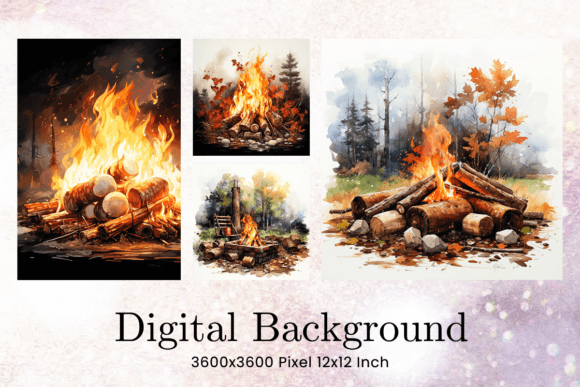
When you are working on a professional project, the quality of your raw materials dictates the quality of your final output. You cannot build a premium brand identity on a shaky foundation. This is why the technical specifications of the Bonfire Campfire Backgrounds Wallpaper matter. You will receive 4 JPG files that are high-resolution 300 DPI. In the world of print design and sublimation, 300 DPI is the gold standard. It ensures that when you transfer this design onto a t-shirt, a mug, or a piece of stationery, the lines remain crisp and the textures of the fire—those glowing embers and wisps of smoke—remain distinct.
The files are formatted as paper files sized at 12" x 12". If you have spent any time in the world of scrapbooking or card making, you know that the 12x12 format is the industry standard. However, the utility of these files goes far beyond paper crafts. Because they are high-quality JPGs, you can easily adjust the size to fit your specific needs. Whether you need a massive backdrop for a web design header or a small texture for a business card, the file holds up. The visual characteristics are rich and moody. Expect deep oranges, glowing yellows, and the dark, charcoal tones of the surrounding night. This visual style speaks to a sense of adventure and coziness simultaneously, a difficult balance to strike that makes these backgrounds incredibly valuable.
Integrating Fire Elements into Brand Strategy
As a designer or brand strategist, your goal is to evoke specific emotions in your audience. The Bonfire Campfire Backgrounds Wallpaper is a powerful tool for triggering feelings of warmth, community, and authenticity. This makes it an ideal candidate for specific niches within graphic design and marketing.
Consider a small business owner in the outdoor industry, a craft brewery, or a wellness retreat center. Using a standard stock photo feels generic, but using a textured, artistic background like this adds a layer of premium craftsmanship to the visual hierarchy. Here is how you can practically apply these assets across various mediums:
- Social Media Graphics: Use the campfire backgrounds as a textured overlay for Instagram stories or quote cards. The fire acts as a natural focal point, drawing the eye to your text overlay without needing complex composition skills.
- Editorial Design: If you are a publisher or blogger writing about autumn themes, survival skills, or cozy living, these backgrounds provide an instant atmosphere for article headers.
- Packaging Design: For artisanal products, packaging often needs to convey that the item is handmade or natural. A subtle campfire texture on a coffee bag or candle box reinforces the product's sensory experience before it is even opened.
- Digital Wallpapers: While the product is named "Wallpaper," in the digital sense, these make excellent desktop or phone backgrounds for those who love the aesthetic of the outdoors.
Practical Application: From Screen to Print
The versatility of the Bonfire Campfire Backgrounds Wallpaper lies in its format. Because it is designed for sublimation, it is optimized for heat transfer printing. This means the colors are vibrant enough to pop on polyester fabrics and hard surfaces. However, you need to be mindful of how you use these in your broader design assets library.
When pairing these backgrounds with typography, you must prioritize readability. A busy, fiery background can easily swallow text if you aren't careful. Here are a few recommendations for maintaining a professional standard:
- Typography Pairing: Avoid overly decorative script fonts or handwritten fonts for long paragraphs. Instead, opt for a bold, clean sans serif font with a heavy weight. The clean geometry of a sans serif typeface contrasts beautifully with the organic, chaotic nature of fire.
- Color Contrast: Use white or cream text to ensure it pops against the darker, fiery tones of the background. If you place text over the brighter flames, consider using a semi-transparent dark overlay or a "knockout" effect.
- Testing: Before sending a file to the printer, zoom in to 100% and check the grain. Ensure your text is legible at the intended viewing distance.
Maximizing Your Investment in Digital Papers
One of the most common mistakes I see in creative work is the underutilization of digital assets. You purchase a set of backgrounds, use it once, and forget it. To get the most out of the Bonfire Campfire Backgrounds Wallpaper, think of it as a texture library rather than just a singular image.
You can manipulate these files to create entirely new looks. By layering them with other textures, applying blend modes like "Multiply" or "Overlay" in Photoshop, or desaturating them for a vintage black-and-white look, you extend the life of the product. For scrapbooking, print them out on high-quality matte paper to create a tactile experience for a photo album. For digital use, tile the 12x12 pattern to create a seamless background for a website.
Finally, always keep in mind the technical realities of digital color. Colors can vary significantly from computer to computer, printer to printer, and depend heavily on the inks and substrates you use. A bright orange on your monitor might appear slightly more muted on cotton fabric. It is always best practice to print a small test swatch before committing to a full production run. This attention to detail is what separates a hobbyist from a professional. By treating these backgrounds as versatile design assets rather than static images, you elevate your work and create a consistent, engaging visual narrative for your audience.