Elevate Projects with Antique Lace Digital Papers
Understanding the Visual Character of These Digital Assets
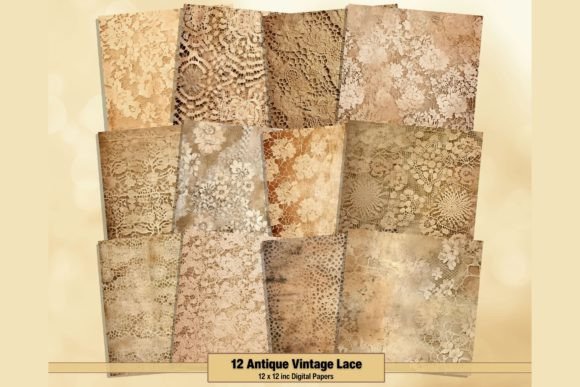
When we talk about Antique Lace Digital Papers, we are discussing more than just a background texture; we are talking about a specific design language. These assets are distinct because they blend the structural intricacy of vintage lacework with the organic wear of time. Visually, you will notice a high level of detail in the filigree and floral patterns, mimicking the look of 19th-century needlework. However, the "distressed" aspect is what gives these files their soul. The backgrounds often feature subtle noise, uneven color grading, and soft edges that prevent the design from looking too clinical or digital.
Unlike a standard premium font that conveys personality through letterforms, these papers convey personality through texture and atmosphere. They possess a "shabby chic" aesthetic that feels warm and tactile. The color palettes usually lean toward sepia, ivory, soft blush, and muted greys. This creates a canvas that is complex enough to be interesting but neutral enough not to overpower the content you place on top of it. It is this balance of intricate detail and visual noise that makes them such a valuable addition to a designer's toolkit.
Strategic Applications for Branding and Design
As a designer or brand strategist, you know that texture influences perception. Using Antique Lace Digital Papers can significantly shift the tone of a project toward romance, nostalgia, and femininity. This makes them an ideal choice for specific niches within brand identity work. For instance, a wedding planning service, a boutique tea brand, or a vintage clothing store could utilize these textures to establish an immediate emotional connection with their audience. The texture acts as a silent ambassador for the brand's values before the customer even reads a word.
In editorial design and packaging design, these assets work exceptionally well as background layers. Imagine a candle label where the paper texture creates the illusion of a handmade product, or a magazine cover where the lace pattern frames the masthead. They are not meant to compete with bold display fonts or heavy serif fonts; rather, they provide a stage for them. When incorporating these into web design or social media graphics, use them sparingly. A full-bleed lace background can be overwhelming on a screen. Instead, use them as accent bars, header backgrounds, or behind pull quotes to add depth without causing visual fatigue.
For crafters and hobbyists, the application is even more direct. These digital papers are the foundation of junk journaling and scrapbooking. They serve as the "canvas" upon which you layer ephemera, photos, and journaling. Because they are high-resolution (500 DPI or higher), they are robust enough for print-on-demand products. You can confidently use them for greeting cards, invitations, and collage art without worrying about pixelation or banding in the gradients.
Typography Pairings and Visual Hierarchy
One of the most critical skills in utilizing textured backgrounds is managing visual hierarchy. When you place text over a complex lace pattern, legibility is the primary concern. You should avoid using delicate script fonts or thin handwritten fonts directly over the busiest parts of the lace, as the fine lines of the type will get lost in the fine lines of the texture.
To solve this, I recommend creating a "knockout" effect. Place a solid shape—perhaps a soft cream rectangle with reduced opacity or a solid banner—between the lace background and your typography. This allows you to use elegant sans serif fonts or bold serifs clearly. Alternatively, if you want the text to sit directly on the texture, choose typefaces with high x-heights and thick strokes. A sturdy geometric sans serif often pairs surprisingly well with vintage lace, creating a modern-vintage contrast that feels fresh and intentional.
Consistency is key when building a layout with these assets. If you are creating a series of social media posts or a multi-page journal, ensure that the "distress level" of the background remains consistent. Mixing a heavily grungy paper with a pristine, clean lace pattern can look disjointed. Treat these digital papers as design assets that require the same care as your typography choices.
Practical Guidance for Implementation and Licensing
Before you download and integrate these files, it is vital to evaluate the technical specifications. The provided files are high-quality JPGs, which is standard for digital art, but you should always check the color profile. For digital use (web/social media), RGB is fine. However, if you plan to send these to a professional printer for packaging or stationery, you will likely need to convert them to CMYK, which may slightly dull the colors. Because the source resolution is 500 DPI, you have plenty of room to scale down for web use without losing quality, or to print large formats.
Regarding licensing, always read the fine print. While these assets are often sold for personal use, "commercial use" can vary. Some licenses allow you to use the paper in a flattened design (like a JPG invitation you sell), but prohibit reselling the raw digital file itself. As a professional, you must ensure your usage complies with the creator's terms to protect your business.
Finally, don't be afraid to experiment with blending modes in your editing software (like Photoshop or Procreate). Setting a lace layer to "Multiply" or "Overlay" can create beautiful, ghostly effects that integrate the texture directly into your photos or illustrations. These Antique Lace Digital Papers are not just static backgrounds; they are versatile tools for adding layers of history and emotion to your creative work.